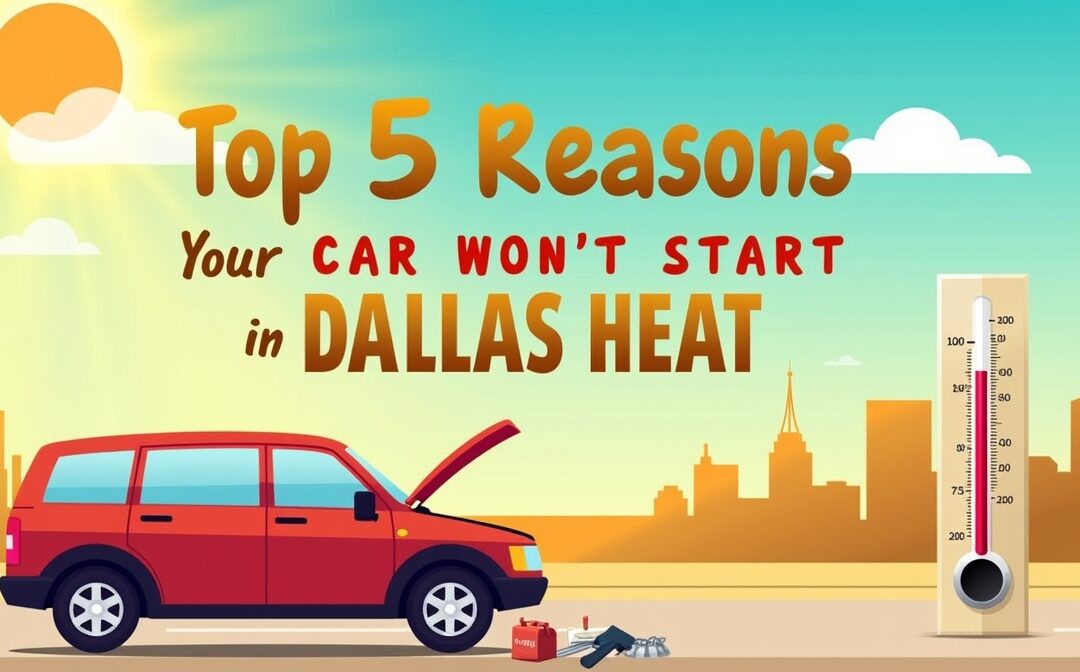
Dallas summers are brutal: temperatures soar, roads sizzle, and plenty of drivers are caught off guard when their car refuses to start—not in winter, but in the peak of Texas heat. If you’ve turned the key and heard nothing but clicks or silence, you’re not alone. The searing Dallas sun can wreak havoc on your vehicle in ways few expect. Here are the top five reasons your car won’t start when it’s hot outside—and how you can fix or prevent each problem.
1. Battery Heat Stress & Fluid Loss
Why it happens:
Extreme heat accelerates the evaporation of the liquid electrolyte inside your car’s battery. Over time, Dallas summers can leave your battery low on fluid, causing a loss of voltage. This weakens the battery’s crank power and can lead to corrosion at the terminals, further hindering the flow of electricity.
Fix & Prevention:
- Check Battery Age: Batteries older than 3 years are especially vulnerable to heat failures.
- Inspect Terminals: Clean or have a professional clean corroded battery terminals.
- Stay Topped Up: For serviceable (not sealed) batteries, check fluid levels and top off with distilled water if needed.
- Seek Shade: Whenever possible, park in a shaded area or garage to reduce direct heat.
- Regular Checks: If the car is slow to crank, get your battery tested and replaced if necessary.
If your car still won’t start, try a jump start. If that doesn’t work, you may need a replacement from a roadside service like M4 Roadside.
2. Vapor Lock in the Fuel System
Why it happens:
At high temperatures, fuel in the lines—especially with older cars—can vaporize before reaching the engine. Vapor lock interrupts the steady flow of fuel and disrupts combustion. Today’s cars with modern fuel injection are less vulnerable, but vapor-related issues can still arise in severe heat, especially if the car is running very low on fuel.
Fix & Prevention:
- Let the Car Cool: If you suspect vapor lock, wait for the engine and fuel system to cool down.
- Keep Tank Above ¼: Hot days are not the time to let the fuel run low—more gasoline in the tank means cooler fuel and reduced risk.
- Check Fuel Lines and Pump: Have a mechanic inspect the health of your fuel pump and lines if heat stalling becomes a persistent problem.
- Fuel Injector Maintenance: Use fuel system cleaners as recommended.
3. Faulty Starter Motor or Overheated Engine Sensors
Why it happens:
Heat can cause the metal components in your starter motor to expand, increasing internal resistance and making it harder for the engine to crank. Similarly, excessive heat can cause sensors like the coolant temperature sensor or the crankshaft position sensor to malfunction, confusing the car’s onboard computer and preventing ignition.
Fix & Prevention:
- Starter Motor Troubleshooting: If nothing happens when you turn the key (not even a click), have the starter checked or replaced by a professional.
- Let It Cool Down: If your engine has overheated, many modern vehicles prevent starting to protect the engine. Allow time for it to cool down completely.
- Check Cooling System: Ensure your cooling system is topped up and working efficiently; low coolant can make overheating—and hot start failure—much more likely.
- Replace Faulty Sensors: Intermittent starting issues that occur only when hot could indicate a failing sensor. A diagnostic scan tool can pinpoint the culprit.
4. Ignition Coil or Electrical Connection Failure
Why it happens:
All car electronics and wiring are stressed in soaring temperatures. Heat can alter the resistance in wiring, degrade ignition coils, and expand (or corrode) electrical contacts, especially in older vehicles. The end result: no spark, no start.
Fix & Prevention:
- Inspect Coils and Wires: Ask your mechanic to check the ignition coils and spark plug wires, especially if the engine misfires or stalls when hot.
- Clean Connections: Ensure battery posts and key electrical contact points (fuses, relays, main fusebox wiring) are free of corrosion and are tightly seated.
- Upgrade if Needed: For persistent electrical issues, upgrading components or re-running ground wires can solve intermittent hot-weather problems.
5. Low Oil or Breakdown of Engine Oil
Why it happens:
Extreme heat puts extra strain on your engine’s oil. Conventional oils can become too thin at high temperatures, reducing their lubricating properties and making the engine harder to turn over. Old, dirty oil also loses effectiveness more rapidly in the summer.
Fix & Prevention:
- Check Oil Regularly: In hot weather, inspect your oil twice as often—look for color, level, and viscosity.
- Switch Oil Grades: If your owner’s manual allows, consider using a slightly thicker grade of oil for summer driving in Dallas.
- Change Oil: Don’t skip scheduled oil changes, especially if your car is seeing lots of traffic, idling, or short trips in the heat.
Quick Summary Table
| Problem | How the Heat Causes It | Easy Fix | Long-Term Solution |
|---|---|---|---|
| Battery Heat Stress | Fluid evaporation, corrosion | Jump-start, fluid top-up | Replace old battery, park in shade |
| Vapor Lock (fuel system) | Gas vaporizes before engine | Cool down and restart | Keep tank above ¼, inspect lines |
| Bad Starter/Sensor | Sticking, failing to read temps | Wait/cool down, scan for errors | Replace starter/sensors |
| Ignition Coil/Electrical | Heat degrades wiring, expands metals | Clean/contact/reseat connections | Replace old parts, improve grounds |
| Oil Breakdown | Too thin, loses lubrication | Top off or change oil | Use proper oil grade, timely change |
Final Summer Driving Tips for Dallas Drivers
- Don’t ignore slow or weak starts! They’re your warning to act before finding yourself stranded.
- Make routine cars checks part of your summer habits: pop the hood, check the battery, oil, and coolant.
- Know your roadside resource: if you’re stuck, call a Dallas local like M4 Roadside Assistance for rapid, expert help.
- Save important numbers—program them in your phone and keep copies in your glovebox.
What to Do If You’re Stranded in the Dallas Heat
If your car won’t start and you’re baking on an I-635 shoulder or an uptown parking lot, don’t risk your safety under the Texas sun. M4 Roadside Assistance can reach you quickly and get you back on the road fast, handling jump starts, fuel delivery, lockouts, flat tire changes, battery replacements, and minor repairs on the spot.
M4 Roadside Assistance Dallas
- Website: www.m4roadside.com
- Service Area: Dallas, Plano, Richardson, Allen, McKinney, Garland & nearby
- Phone: +1 214-899-3744
- Address: 4250 E Renner Rd, Richardson, TX 75082
- Hours: 24/7, every day of the week
Save our number now, so you’re never left stranded. With expert, friendly, and local service, M4 Roadside gets you rolling again—no matter how hot it gets in Dallas!
Dallas drives on. Beat the heat, and drive with confidence!