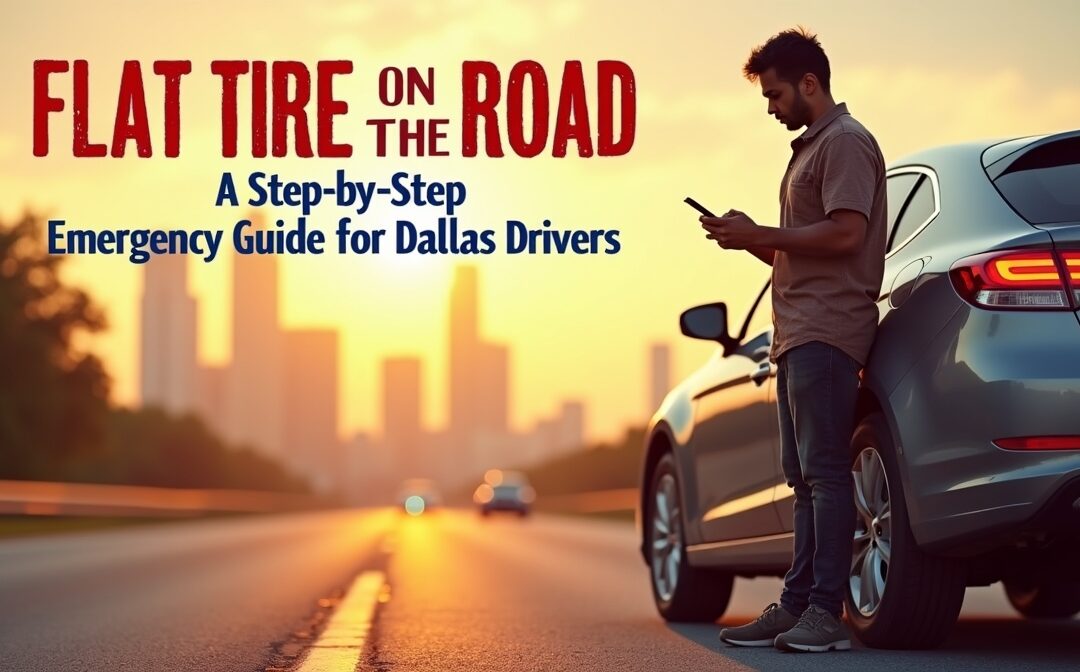
Few driving problems cause more immediate stress than a flat tire—especially on a busy Dallas road, in the Texas heat, or far from home. But whether you’re commuting on the I-635, running errands in Plano, or setting out on a road trip toward McKinney, knowing what to do next can turn an emergency into a safe, manageable situation. This guide gives you clear, expert advice for handling a flat tire on Dallas-area roads, step by step.
1. Stay Calm and Find a Safe Spot to Pull Over
As soon as you realize you may have a flat (the steering feels “heavy,” you hear a thumping, or your Tire Pressure Monitoring System flashes), don’t panic:
- Signal and slow down: Put on your hazard lights as soon as you notice the issue.
- Choose a safe location: Aim for a wide shoulder, parking lot, or side street. Never stop in the middle of traffic if you can avoid it.
- Flat ground is best: Try to find a flat and straight spot—changing a tire on a hill or uneven pavement can be hazardous.
- Avoid bends and blind spots: This helps other drivers see you and avoid accidents.
In Dallas: Look for exits or well-lit parking lots, but don’t push your luck driving far on a flat. Pull over safely, even if that means waiting for a tow or roadside assistance.
2. Make Your Car Visible and Safe
- Turn on hazard lights. Warn other drivers, especially at night or in bad weather.
- Apply the parking brake. Ensures your car won’t roll while you work.
- Deploy reflective triangles or flares (if you have them). Place behind your car to alert oncoming vehicles.
- Keep passengers inside. Unless you’re in immediate danger, it’s usually safest for passengers to stay belted inside the car, out of the way.
3. Assemble Your Tools and Supplies
Make sure you have the following items, which your vehicle should include:
- Spare tire (fully inflated)
- Car jack
- Lug wrench (tire iron)
- Owner’s manual (may have specific instructions)
- Flashlight (for nighttime emergencies)
- Gloves (optional but helpful)
- Wheel wedges or blocks (for added security)
Tip: Dallas summers are hot; carry bottled water in your emergency kit, and consider a hat or sunscreen if you’ll be exposed to the sun.
4. Change the Tire (Step-by-Step Guide)
a. Loosen Lug Nuts
- Use the lug wrench to turn the lug nuts counterclockwise.
- Don’t remove them completely yet—just break them loose while the wheel’s on the ground for leverage.
b. Lift Your Vehicle
- Place the jack under the car frame as indicated in your owner’s manual (usually near the tire you’re changing).
- Raise the vehicle until the flat tire is about 6in off the ground.
- Never crawl under the car while it’s supported only by a jack.
c. Remove the Flats
- Finish unscrewing the lug nuts and place them somewhere safe.
- Carefully pull the flat tire straight off. Roll it away from the road.
d. Mount the Spare
- Place the spare on the car, aligning the rim with lug bolts.
- Hand-tighten the lug nuts onto the bolts.
e. Lower the Vehicle and Tighten Lug Nuts
- Lower the jack until the spare touches the ground and the car’s weight is fully on it.
- Use a “star” pattern to tighten the lug nuts—tighten one, then the opposite, to ensure even pressure.
f. Stow Everything and Check
- Put away your tools and the flat tire.
- Double-check that all lug nuts are tight.
- Remove hazard signals, but keep hazards on until fully back in traffic.
5. Can’t Change the Tire? Here’s What to Do
Dallas traffic, extreme heat, or lack of gear can make DIY tire changes risky. Consider these situations:
- You’re on a narrow shoulder, bridge, or high-traffic area.
- You don’t have the correct tools or a working spare.
- You can’t safely loosen the lug nuts or jack the car.
Call for help: Many drivers safely rely on local roadside professionals for these circumstances. M4 Roadside Assistance provides 24/7 flat tire changes anywhere in Dallas and area cities—fast, expert, and affordable.
6. What to Do After Installation
- Spares (especially “donut” tires) are temporary—only drive to the nearest service shop and obey speed limits (usually ≤50mph).
- Have your flat inspected and repaired or replaced as soon as possible.
- If you used your spare, get it replaced or repaired so you’re ready for any future flats.
7. Dallas-Specific Safety & Prevention Tips
- Dallas summers: Hot pavement can degrade tires more quickly—check your tire pressure and tread monthly.
- Road debris: Watch for nails, bolts, and sharp objects, especially after storms or construction.
- Emergency kit: Keep your car stocked with water, emergency contact info, a phone charger, and sun protection.
- Know your route: Use maps or your phone’s GPS to mark safe pull-off spots on regular routes.
When in Doubt, Get Help Fast
Flat tires are stressful but manageable—if you prepare, stay calm, and focus on safety first. If you’re ever in doubt, don’t risk injury or heat exhaustion. Let local professionals handle the hard work and get you rolling again.
Need Help Changing a Flat in Dallas?
M4 Roadside Assistance Dallas
- Website: www.m4roadside.com
- Phone: +1 214-899-3744
- Service area: Dallas, Plano, Richardson, Allen, McKinney, Garland & nearby
- On-call: 24/7, every day of the year
- Address: 4250 E Renner Rd, Richardson, TX 75082
Whether it’s a flat tire, dead battery, lockout, or any roadside emergency, M4 Roadside is your partner for fast, reliable, affordable help throughout the Dallas area.
Drive safe, and keep our number handy—because you just never know when you’ll need a hand!